A video wall in the entrance area, a 4K LED display on the trade fair stand, or a permanently operated control room display rarely becomes expensive solely because of the panel. The costs of a commercial display installation arise where screen area, space, infrastructure, and usage come together. Those who accurately assess these factors early on prevent additional charges and receive a solution whose image quality and operational reliability are suited to the application.
For professional direct-view LED projects, a price per square metre is therefore at best a first indication. For a reliable budget decision, format, resolution, mounting type, control, electrical connection, and service requirements count just as much as the LED modules themselves.
Correctly assessing the costs of a commercial display installation
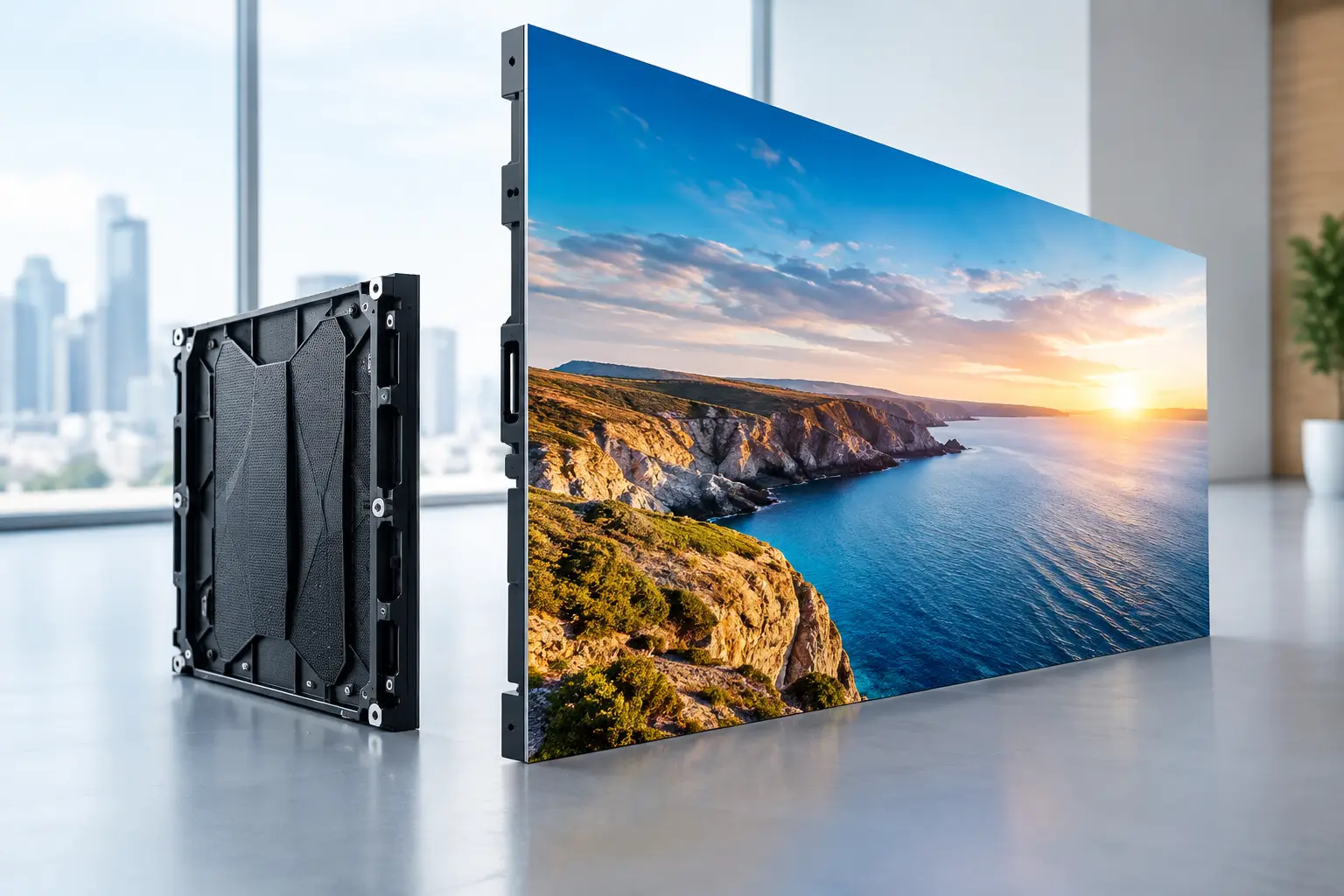
A commercial display installation consists of several technical and organisational components. With an all-in-one LED display, power supply, control, and image processing can be largely integrated. This noticeably reduces the installation and coordination effort. In contrast, a freely configured DVLED video wall with a special format, integration into furniture or walls, and multiple signal sources increases the planning effort.
The crucial question is not which display is offered at the lowest price. The crucial factor is what function the screen is intended to fulfil permanently. A display for a three-day trade fair appearance requires mobility, quick setup and dismantling, and a secure transport solution. Advertising space in retail demands high visibility in changing lighting conditions and simple content playback. In control rooms and emergency control centres, continuous operation, reliability, ergonomic readability, and the integration of multiple information sources are paramount.
The budget should therefore always be considered as a project budget: hardware, planning, installation, commissioning, and operation belong together. A seemingly inexpensive individual product can become expensive if on-site prerequisites are missing or control, mounting, and cabling have to be added later.
The biggest cost drivers for DVLED and large screens
Screen area, pixel pitch, and technology
The dimensions of the screen area directly influence material, transport, and installation costs. With LEDs, the pixel pitch is added, which is the distance between individual pixels. The smaller the pixel pitch, the higher the pixel density and the closer the viewer can stand to the display. This is often useful for meeting rooms, retail applications, or touch displays with short viewing distances. On large exhibition stands or for viewing from further away, a coarser pixel pitch can be more economical without compromising the visual impact.
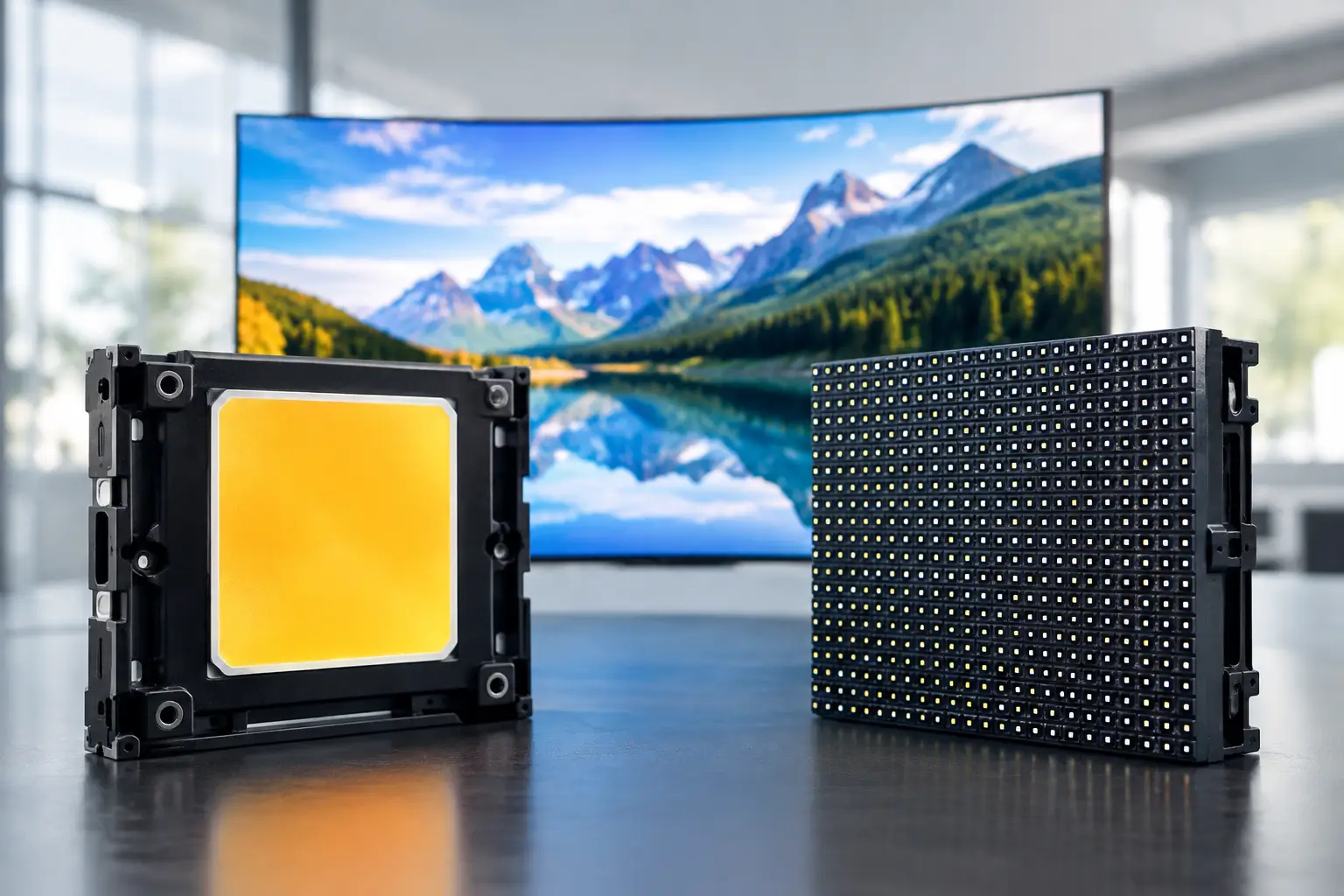
COB technology can be particularly worthwhile for high-quality indoor installations. The Chip-on-Board construction supports high contrast, deep black levels, and a seamless, robust surface. Whether the additional cost is justified depends on the ambient light, proximity to the display, desired image quality, and usage. A presentation area with demanding brand content has different requirements than an information display viewed from a greater distance.
The desired resolution must also match the content. 4K display is a clear advantage for large screen diagonals, detailed product visualisations, data views, and multi-window applications. However, it requires appropriate image processing and suitable signal paths. Those who primarily show simple signage content or Full HD video should not opt for an oversized resolution solely for marketing reasons.
Installation, supporting structure, and structural requirements
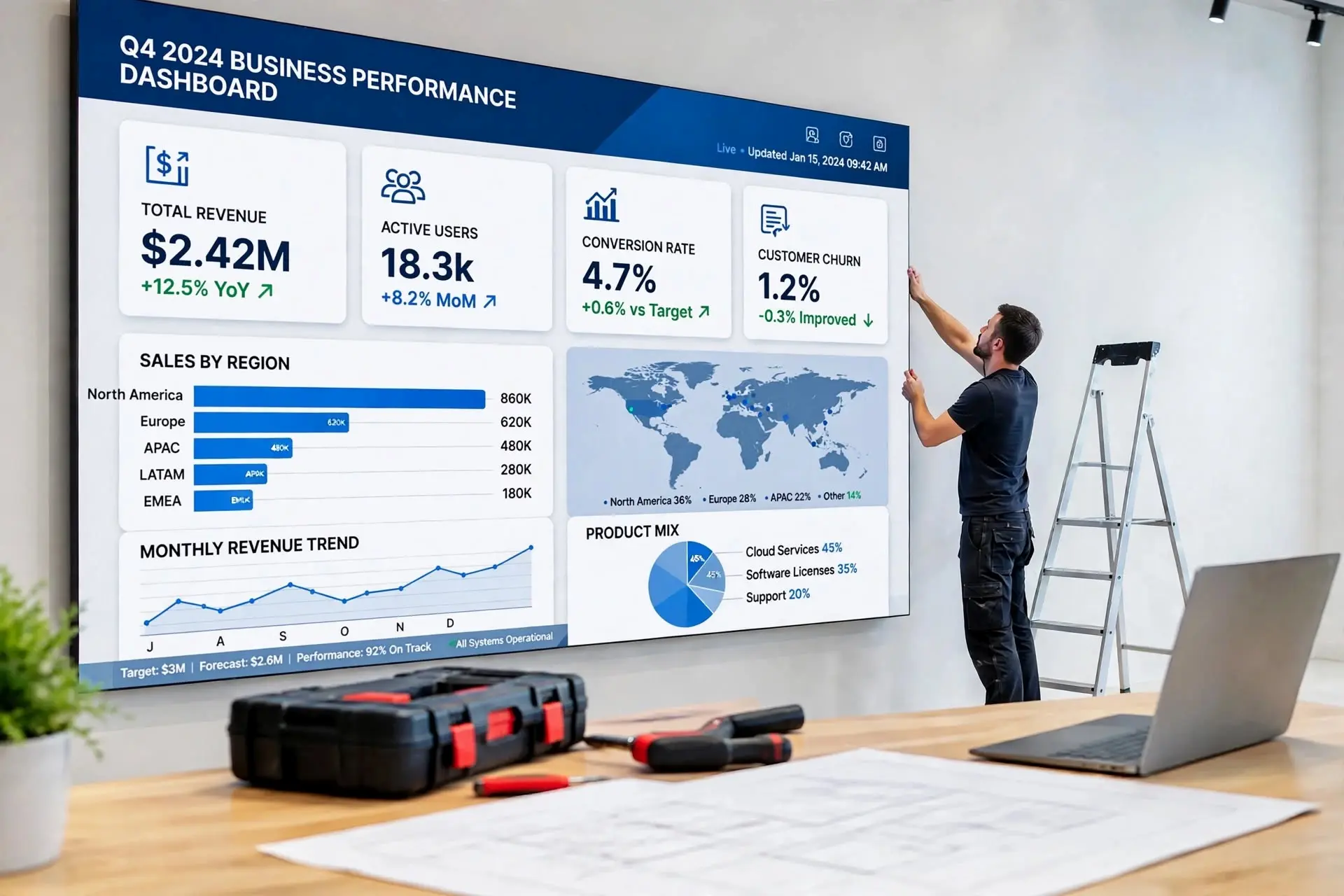
Installation is often underestimated. A mobile LED screen wall on castors is ready for use in many cases and can serve multiple venues. A permanently installed video wall, on the other hand, requires a precise check of the wall structure, load-bearing capacity, substructure, and accessibility. For ceiling suspensions, static aspects, safety points, and coordination with exhibition stand construction or building management are added.
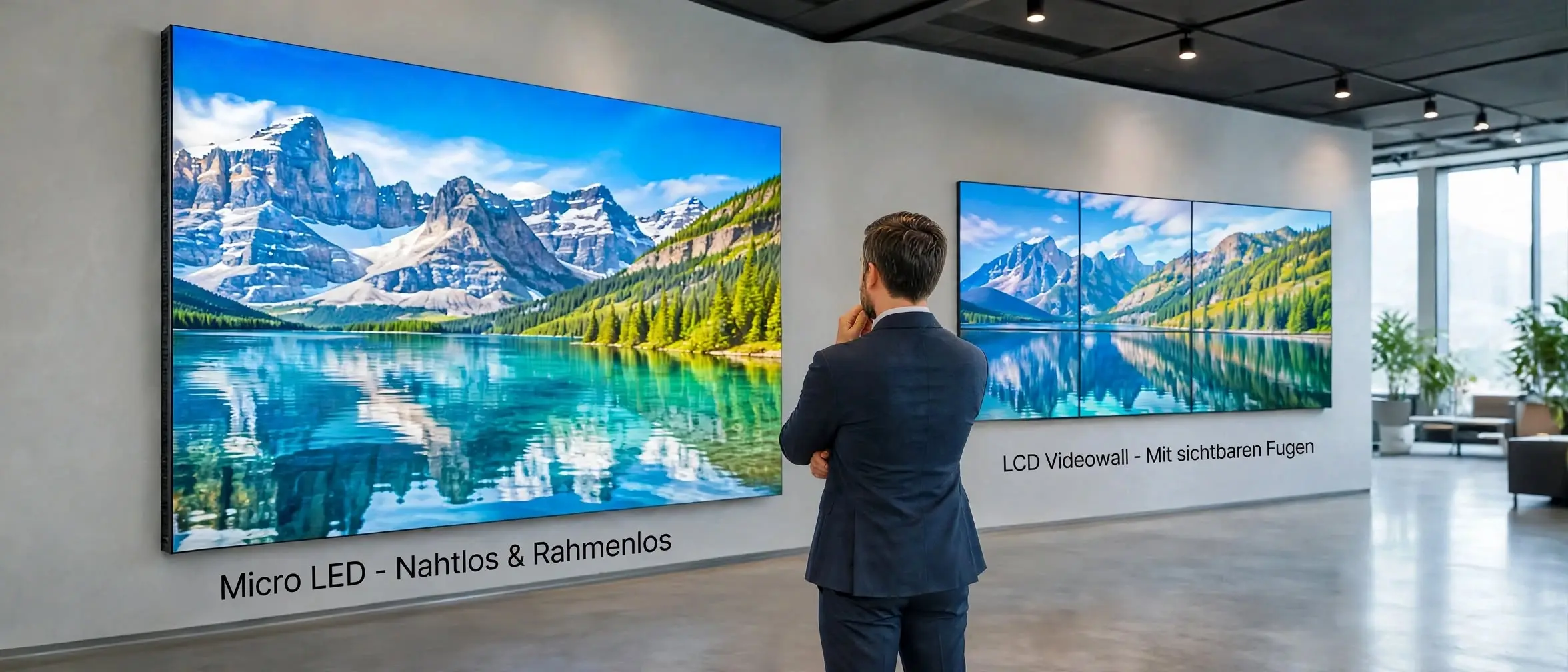
The installation situation also influences the effort involved. If the display is to be integrated flush into a wall, furniture, or brand architecture, the joint pattern, ventilation, service access, and cable routing must be defined before ordering. Modules must remain accessible for maintenance and potential replacement. Front service can be advantageous in tight installation spaces, but it is not the most economical choice in every configuration.
For temporary installations, logistics are also important. Delivery windows, access routes, elevators, floors, floor protection, setup times, and dismantling are real cost factors. Especially at trade fairs, a well-thought-out, transportable system solution determines how predictable the deployment will be.
Power, data, and integrated control
Every professional display area requires a coordinated power supply. Connection capacity, load distribution, fusing, and the available feed-in point are relevant. For extensive LED walls or multiple displays, an initial electrical inspection can prevent later modifications. For critical applications, integration into an uninterruptible power supply may also be necessary.
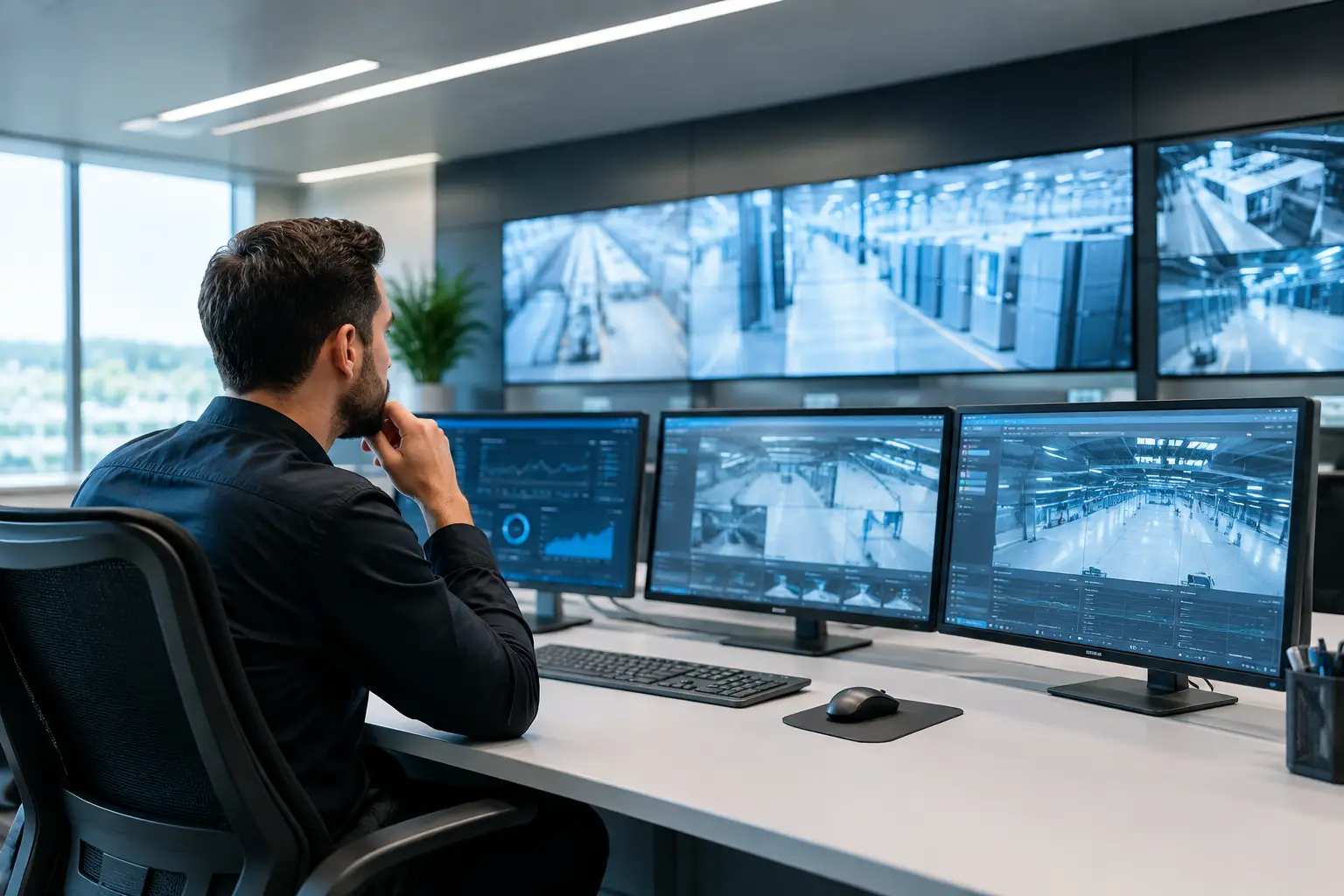
On the signal side, it's not just about an HDMI cable. Multiple sources, 4K signals, long cable runs, media control, and network access increase the demands. Integrated control and image processing reduce interfaces and ensure that content appears in the intended format. In control rooms, video workstations, map applications, camera feeds, or operational management data can also be integrated. Here, compatibility with the existing AV and IT environment is a key calculation factor.
Coordination with IT and information security should happen early. Questions about network segments, remote access, user rights, and content sharing should be clarified well before commissioning. This saves time and protects the planned go-live date.
Content, Operation, and Commissioning
An LED display only becomes effective when content is prepared for the area. Portrait format, special aspect ratios, very wide video walls, or interactive touch surfaces may require adapted layouts. Small text, fine lines, and inappropriately scaled images can lose impact even on high-quality hardware.
Commissioning includes calibration, brightness adjustment, colour check, signal tests, and instruction for those responsible. In sensitive control room environments, test operation should be carried out with realistic sources and operating procedures. For event and trade fair projects, a defined acceptance date is helpful so that image, content, and control are checked before visitors arrive.
Plan budget according to the use case
For a trade fair stand, a leasing model is often sensible if a large display area is only needed on specific dates or if the budget is to be spread over several months. In addition to the display technology, transport, setup, dismantling, and possibly support during the event must then be included in the calculation. A mobile all-in-one system can be cheaper than a custom-built wall if reusability and short setup times are a priority.
In retail and corporate lobbies, fixed installation is usually designed for the long term. Here, it is worthwhile to evaluate not only the purchase price but also operating hours, energy consumption, brightness control, and maintenance access. A configuration that is too bright can increase electricity costs and appear unpleasant indoors. A solution that is too dim, on the other hand, loses visibility in high ambient light.
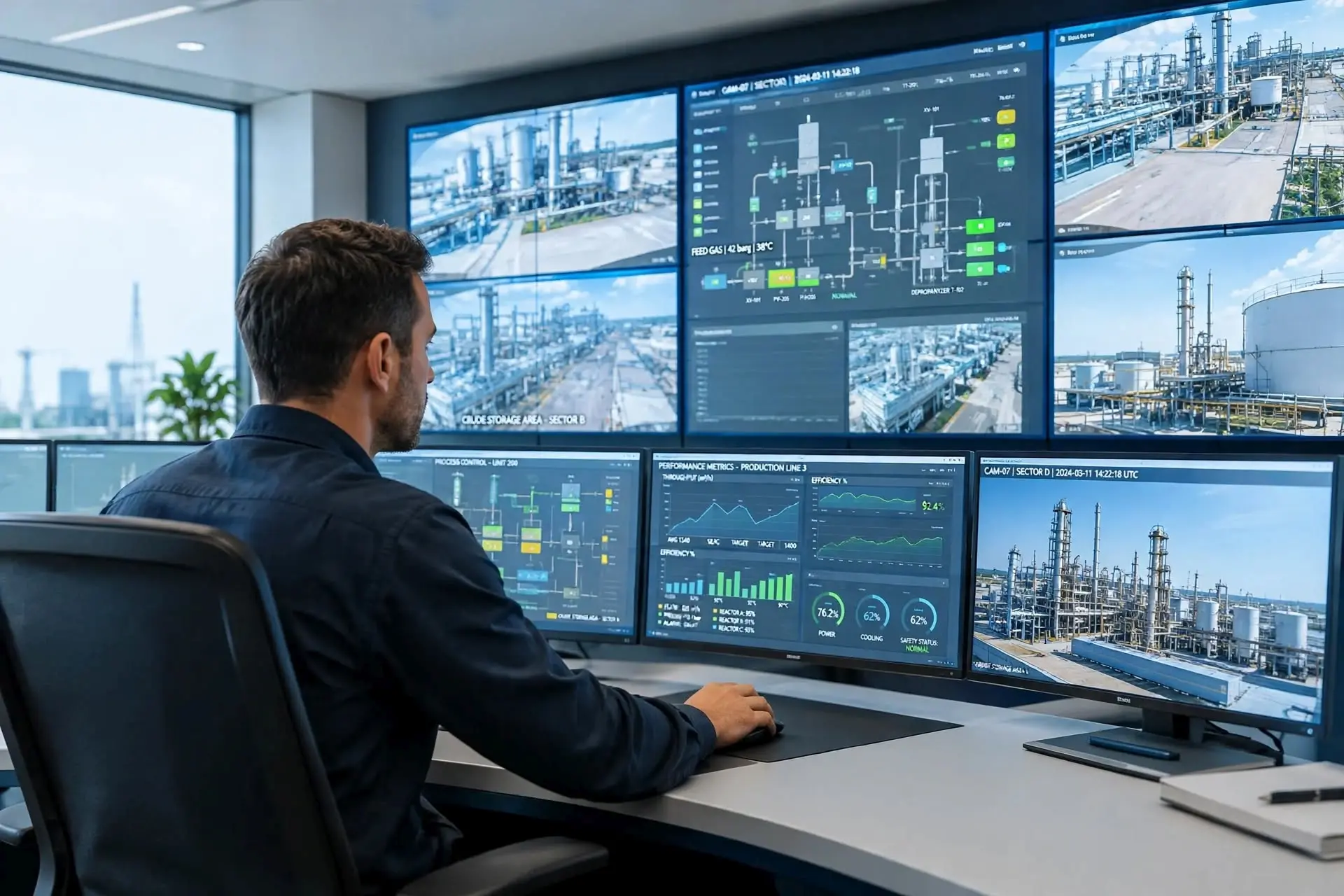
In control rooms and command centres, the cheapest entry point is rarely the most economical decision. The system must operate reliably over long periods, display information clearly, and be quickly accessible in the event of a fault. Redundancy concepts, spare modules, service times, and documented operating procedures are not optional extras here, but essential components of operational safety.
This is how a robust project calculation is created
A good enquiry doesn't start with a desired diagonal size, but with clear usage data. Planners and procurement managers should specify the location, room dimensions, viewing distance, planned content, operating hours, available power and data connections, and the timeframe. For fixed installations, photos of the installation situation, wall plans, and load-bearing capacity information are particularly helpful.
Afterwards, it can be decided whether an integrated all-in-one display or a modular DVLED video wall is the better solution. The all-in-one principle often shortens installation and commissioning. The modular solution offers more freedom in terms of format, resolution, and architectural integration. Both approaches are sensible – the right choice depends on usage, space, and desired expandability.
A professional offer should make the performance limits visible: What installation is included? Who provides power and network? Which signal sources are tested? How are delivery, access, and acceptance organised? And what services apply after handover? Transparency in these areas makes costs comparable and protects against gaps between trades.
For projects with demanding image quality, mobile use, or critical information processes, an early technical project discussion is worthwhile. Describe your project in the direct chat as specifically as possible – including location, target image, distances, signal sources, and deadline. This way, a general price query can develop into a display installation that is technically suitable and predictable in operation.